Several AMETEK Land instruments are used to demonstrate compliance with national or international environmental regulations. These include the 4500 MkIII opacity monitor and the FGA900 series multi-gas analyser. In this article, I will discuss what it is that distinguishes a compliance instrument from any other type.
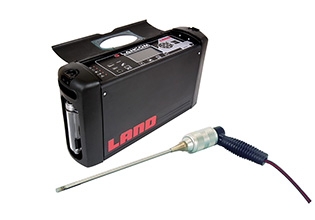
Environmental regulations worldwide are designed to protect human health and the natural world by limiting the amount of pollution that can be emitted from an industrial facility such as a power plant, and site operators are required to demonstrate compliance with the regulation. Smaller processes must perform periodic checks to show they are complying, and the AMETEK Land
Lancom 4 portable gas analyser is well-suited to such measurements.
Larger combustion processes usually have to install a continuous emissions monitoring system (CEMS) to measure and record the concentration of pollutants emitted. To ensure high-quality, accurate measurements, regulations specify the performance and quality-control checks that are needed. Older rules, especially in the United States, would give detailed rules for how the measurement should be made. Unfortunately, such rules are inflexible and can preclude the use of newer and better measurement techniques. More recent regulations specify what must be achieved – for example an opacity limit of 20% - but delegate the details to a standard which is incorporated by reference. A standard is defined as a “document, established by consensus and approved by a recognised body, that provides, for common and repeated use, rules, guidelines or characteristics for activities or their results, aimed at the achievement of the optimum degree of order in a given context”.

In Europe, the usual standards-making body is CEN, from the French acronym Comité Européen de Normalisation, and its standards are recognised by the European Union. In the United States, environmental standards are usually published by ASTM International, originally known as the American Society for Testing and Materials. Analysers used in CEMS are generally required to comply with either a CEN or an ASTM standard. For example, the analysers used in CEMS are generally required to comply with either a CEN or an ASTM standard. For example, the 4500 MkIII opacity monitor meets the requirements of both EN 15267 and ASTM D6216-12.

There are some significant differences between the approaches to compliance in Europe and the USA. Compliance with EN 15267 requires an independent type test of the instrument followed by periodic audits of AMETEK Land’s manufacturing facility. Compliance with ASTM D6216-12 is demonstrated by a series of detailed tests which are carried out at the
AMETEK Land factory in Dronfield, UK and whose results are given in a lengthy test report which accompanies each instrument.
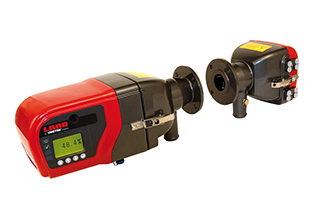
The final thing to note is that some instruments used for compliance measurements can be used, either directly or in a modified form, for other measurements. A good example of this it the
AMETEK Land 4200+ opacity monitor. It uses the same optical chassis and electronics as the 4500 MkIII, but it lacks an automatic calibration facility. Removing the additional hardware, and eliminating the extensive testing required by ASTM D6216 allow the instrument to be sold at a significantly lower price even though there is little difference in its measurement uncertainty.
For more information on our opacity and dust monitors please
click here.